In order to anticipate the evolution of the commune of Marcheprime, located in Gironde, in the South-West of France, the mayor wishes to make the heart of the city more attractive by the requalification of its center and its densification. A new development of the space, still very dispersed and not valued, had to be imagined, including in particular the creation of collective housing as well as new activities.
Thus, the project revolves around three developed poles: the housing pole, the commercial and dynamic pole, and the festive and leisure pole. Overall, a connection is established between these three poles through the search for porosity within the architecture. It is also a question of preserving the park from densification and of revaluing it as being the vegetal and breathing lung of the city, of putting forward soft mobility and wandering or strolling through the paths created, but also of favoring the gathering of inhabitants through places of activity and crossroads.
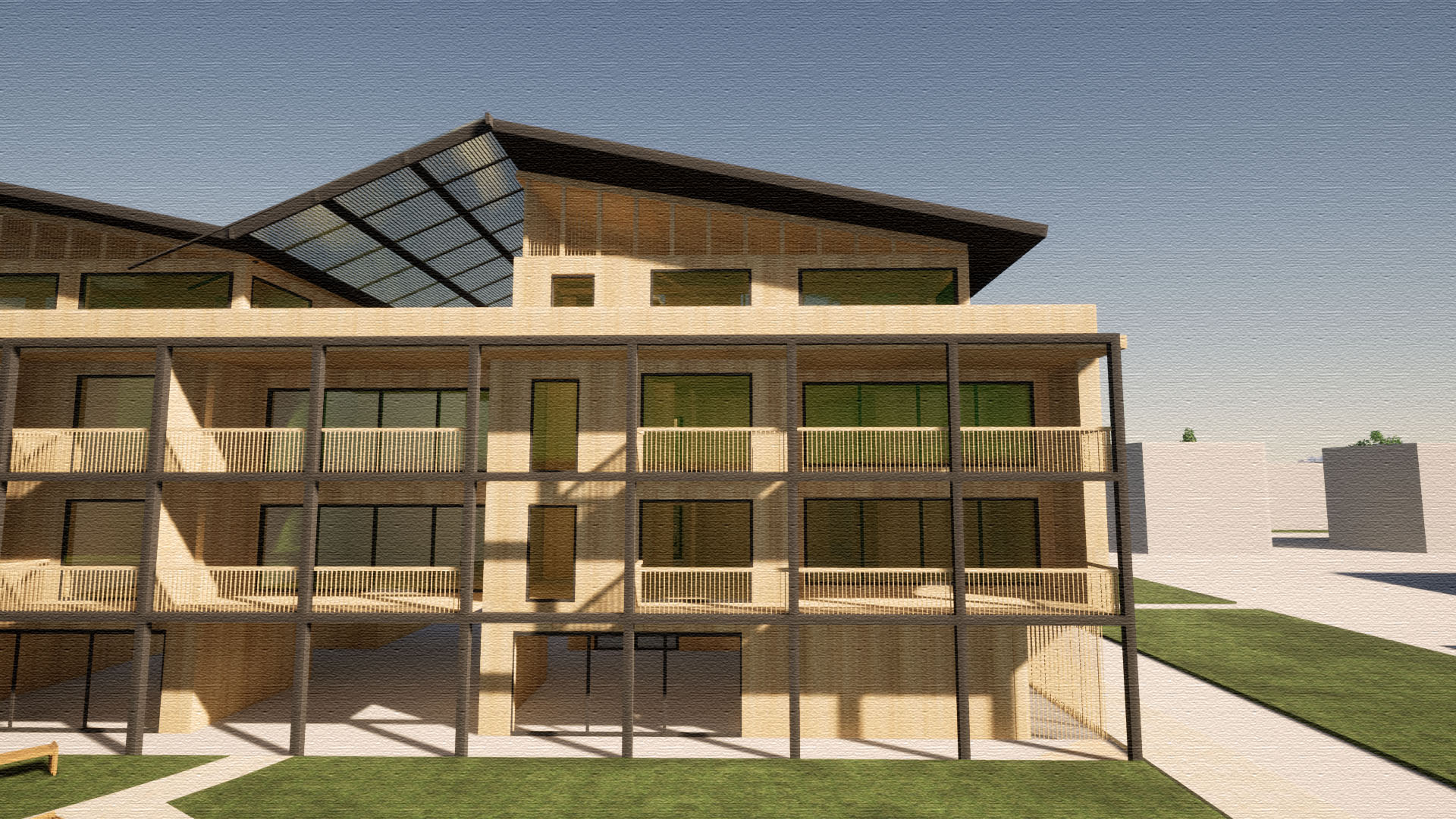
façade de rue sud
A new architectural identity
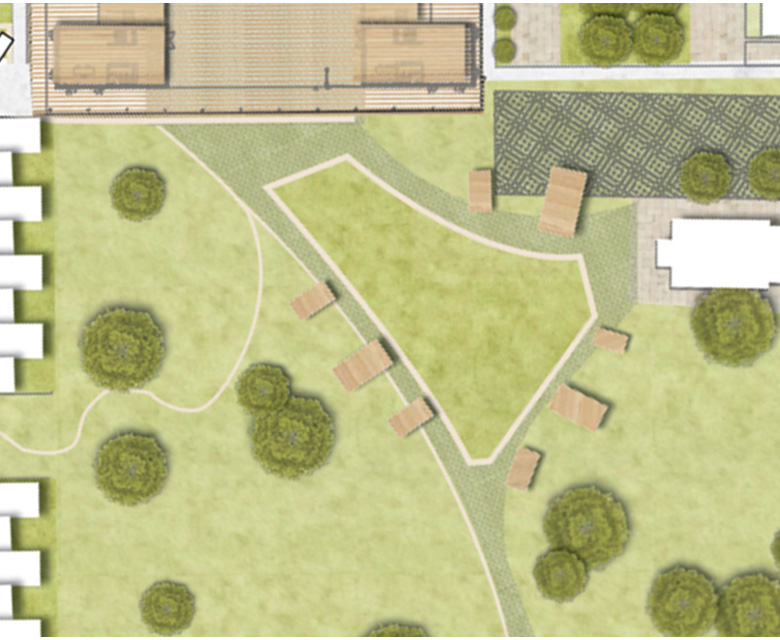
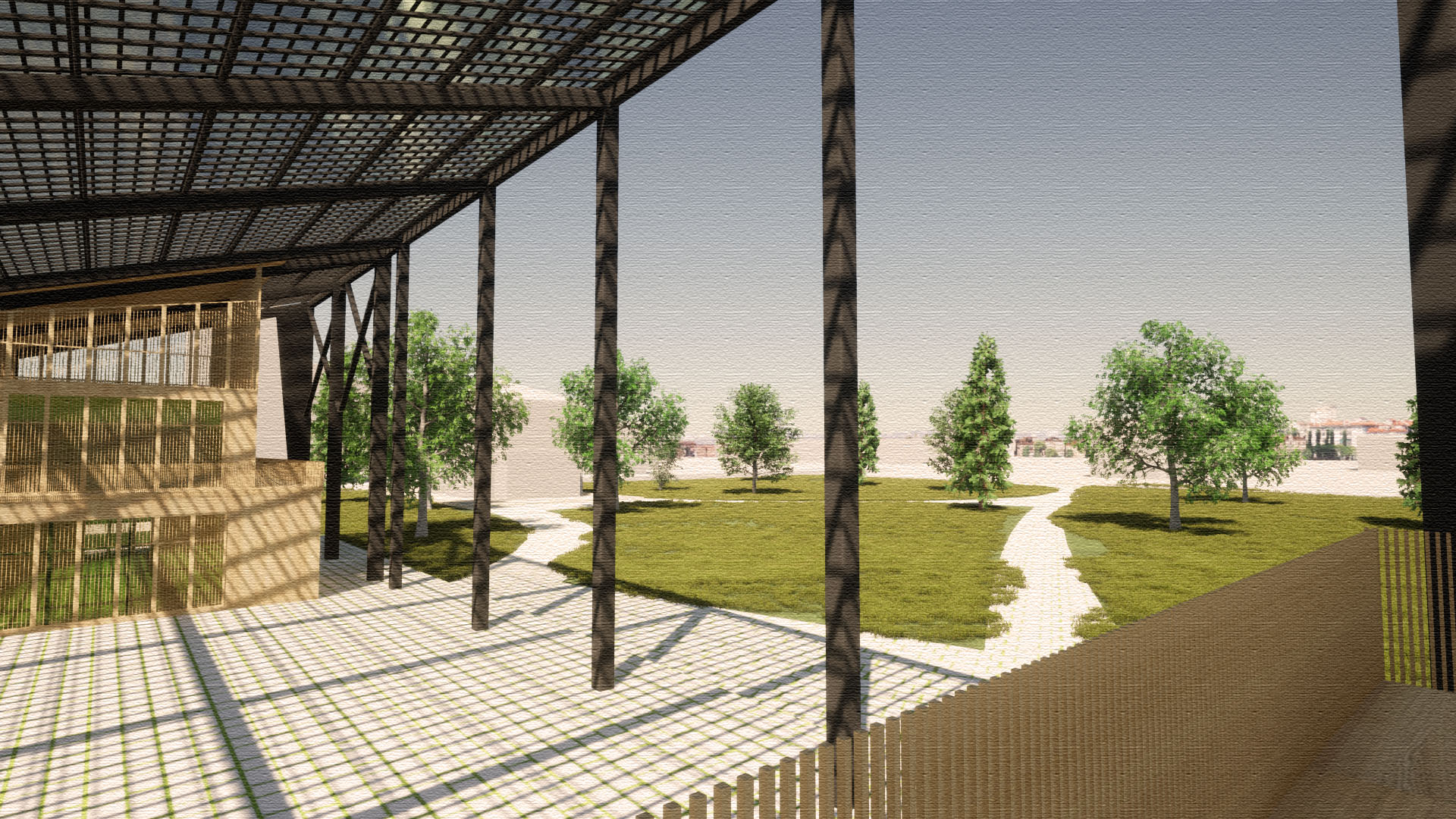
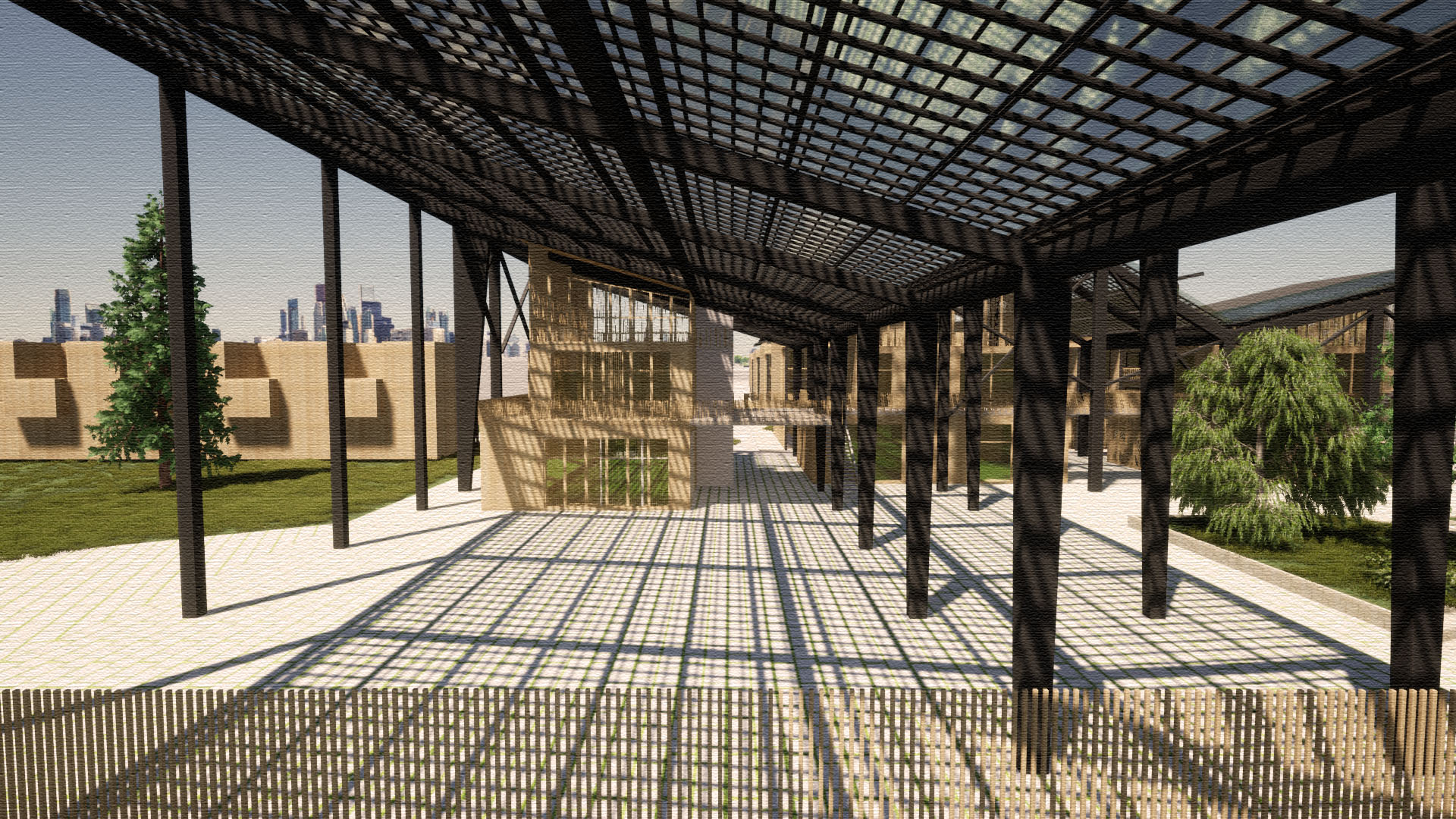
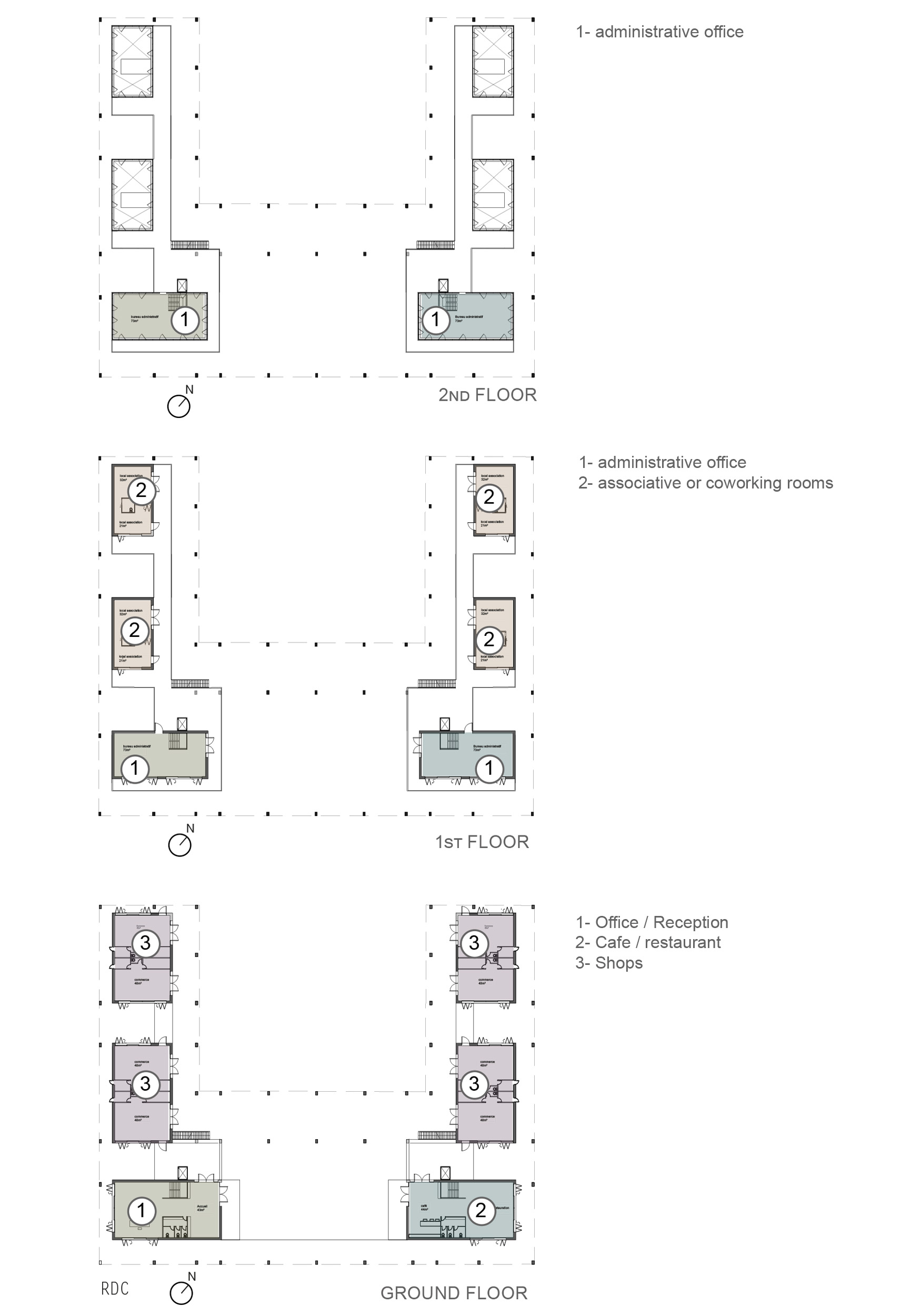
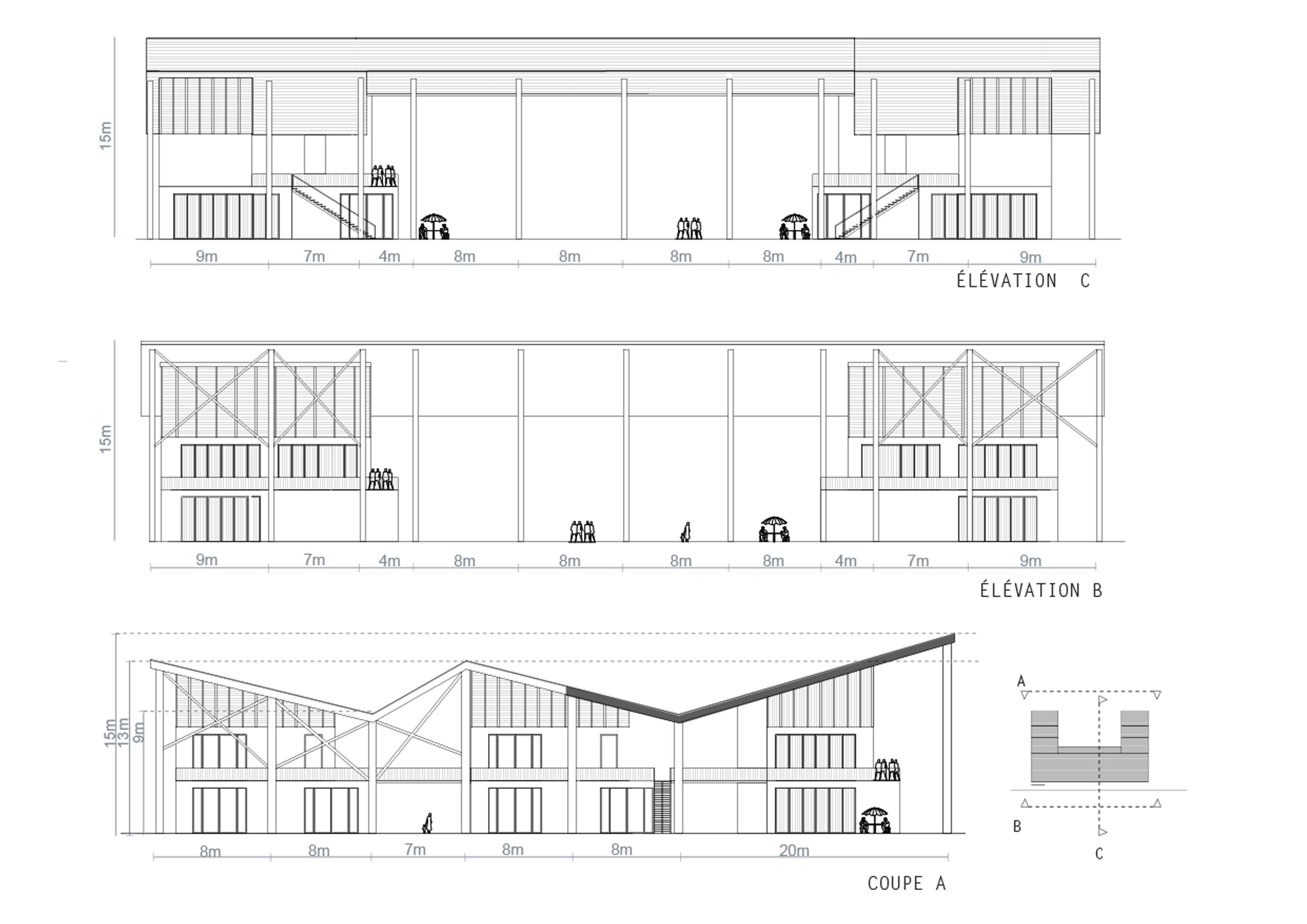
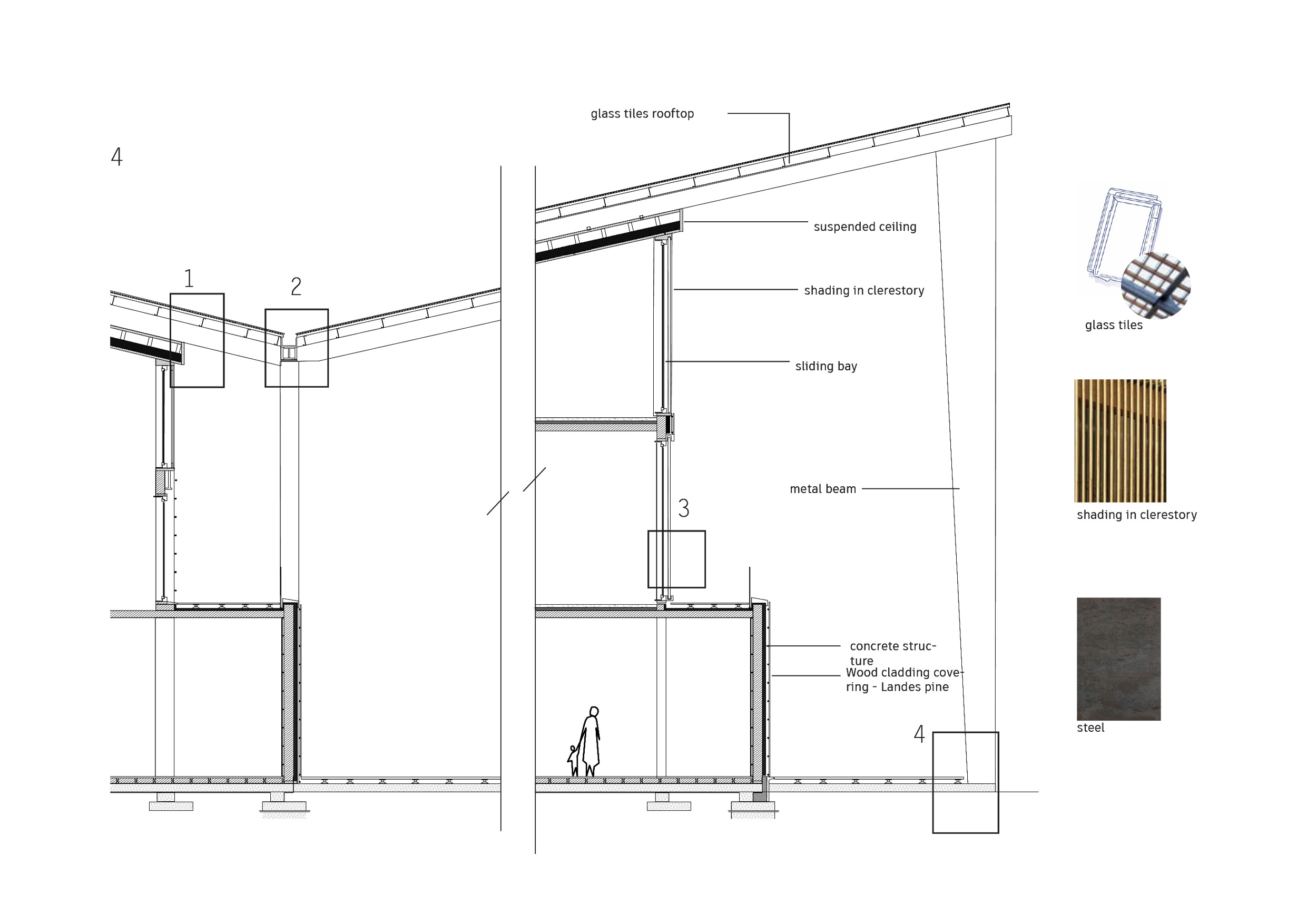
To meet the expectations of the new heart of Marcheprime, a new square has been imagined around which different volumes are arranged, hosting a mixed program of shops, restaurants on the ground floor and spaces for associations or co-working upstairs. It will play the role of a dynamic center in the heart of the city like a village square. Its dynamic roof, made of glass and metal, will connect the different volumes on either side of the square in order to give the inhabitants the feeling of being welcomed and enveloped, before joining to form an open hall which will mark a threshold. between the dynamic place and the pleasure park. If the park as a whole is preserved, a mineral path is however proposed, allowing to connect the station and the media library in order to integrate them more in this new heart of the city. In the center of this treatment of the ground a vegetal space takes shape. One can imagine that ephemeral stands are deployed around it on the occasion of festive events or quite simply for people passing through leaving the station.
Collective housing
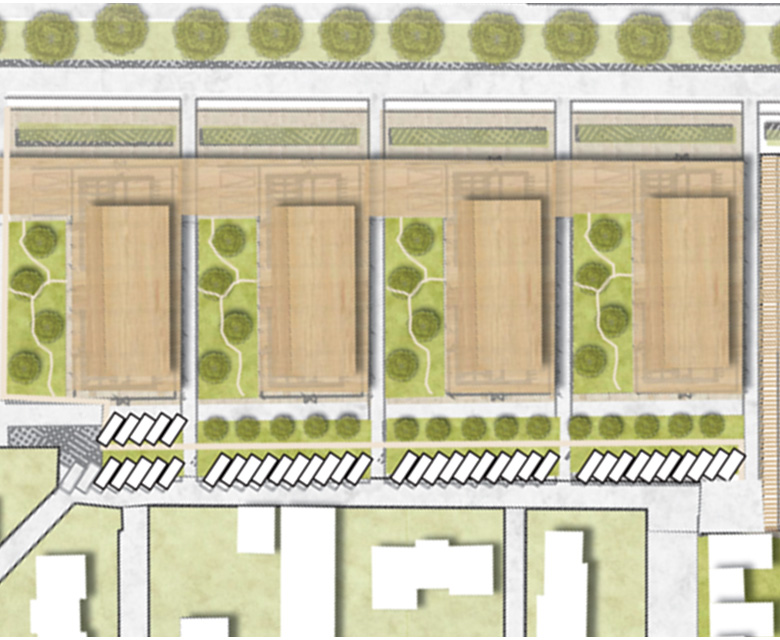
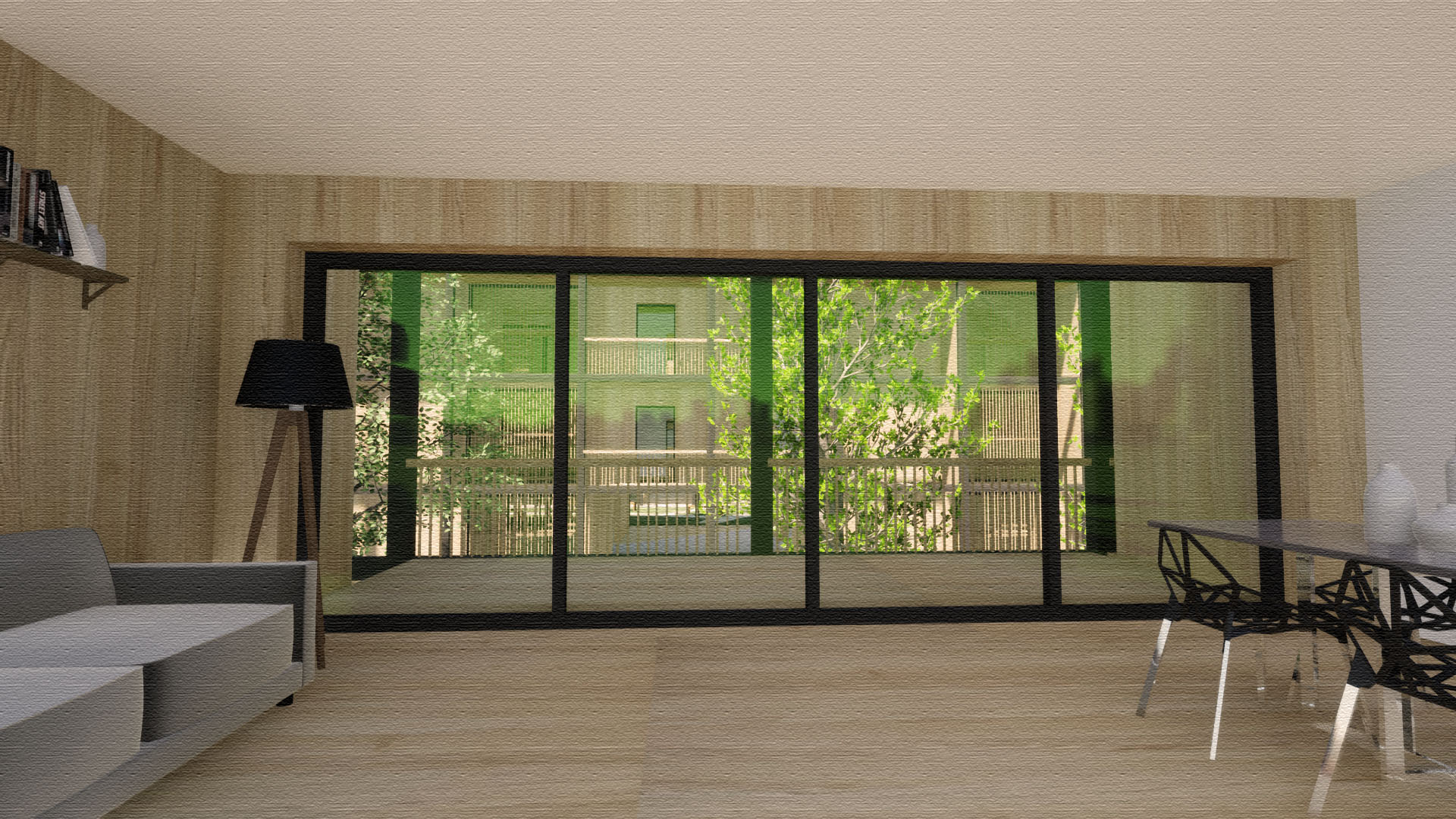
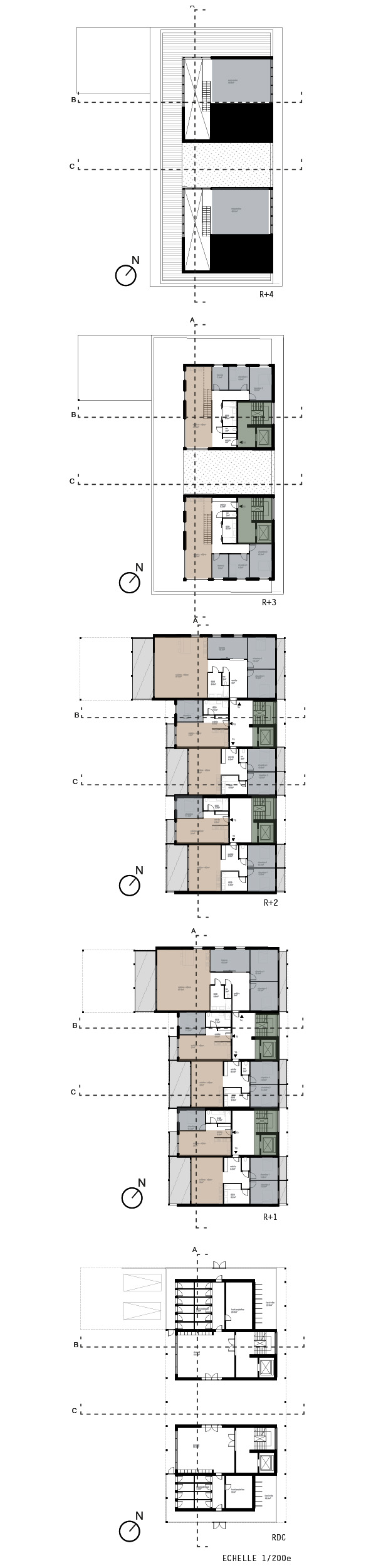
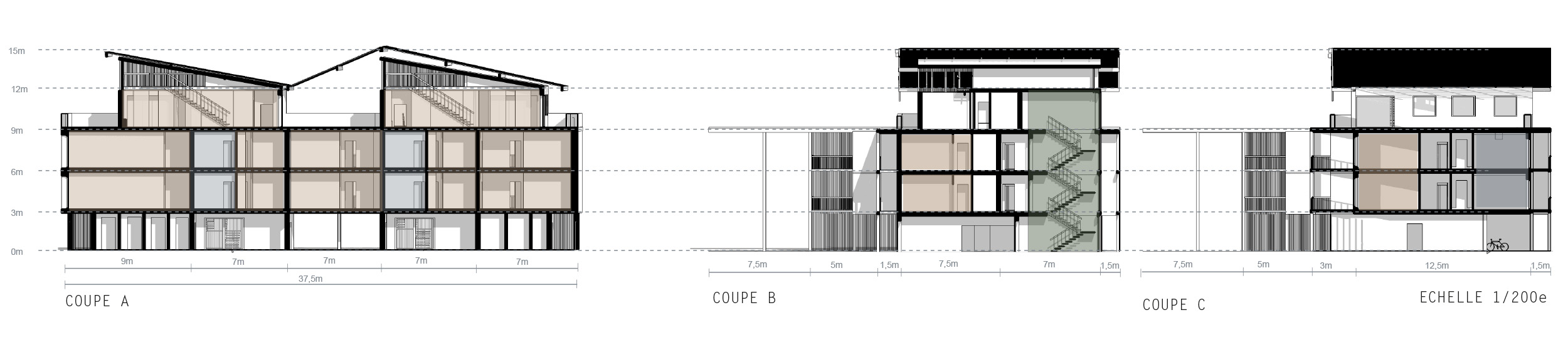
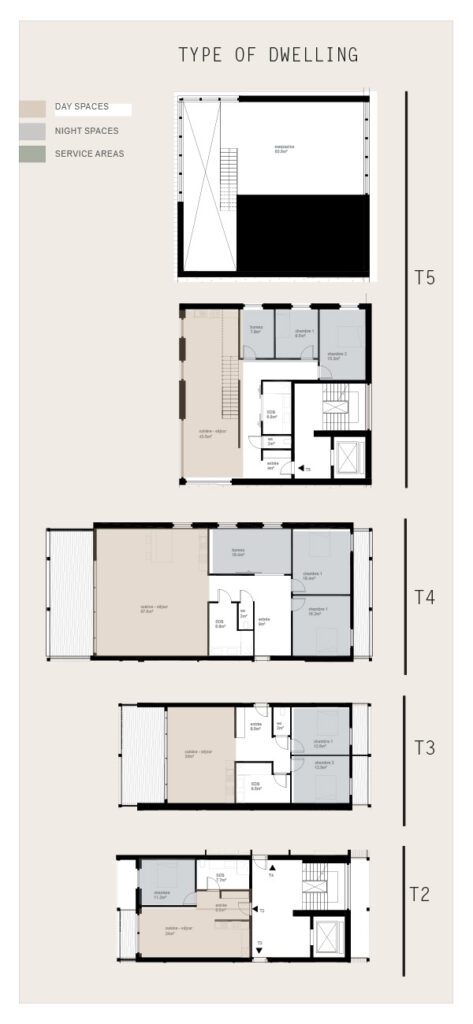
To anticipate the demographic development of the city and to accompany the new changes, a set of collective housing is included in the program. Built according to an L-shaped volumetry, the collective housing can benefit from southern light, as well as align and regularize the street facade. A certain porosity is maintain via large porticoes giving access to common landscaped gardens allowing islands of freshness and the opportunity for the inhabitants to cross paths and meet.. The shape of the roof as well as the materials used are part of the continuity of the new architectural identity of the city. Each building include accommodation ranging from T2 to T5 to accommodate different types of households. The accommodations on the first and second floors are through and each benefit from balconies or terraces overlooking the green gardens. On the third floor are attic accommodation, with furnished terraces suitable for the largest families. Finally, the common areas, such as storage spaces and mailboxes, are located on the ground floor. As for the parking lots, they are present along a green path outside the buildings.